

Owen Diesel is one of the mechanical engineers at Beruseal with a strong background in engineering design and problem solving.
With a solid foundation in engineering principles and health and safety standards. Owen contributes to the development of reliable solutions that support critical leak sealing applications at Beruseal and provides understanding to the complete impact for leak sealing beyond the purpose of just “sealing a leak”.
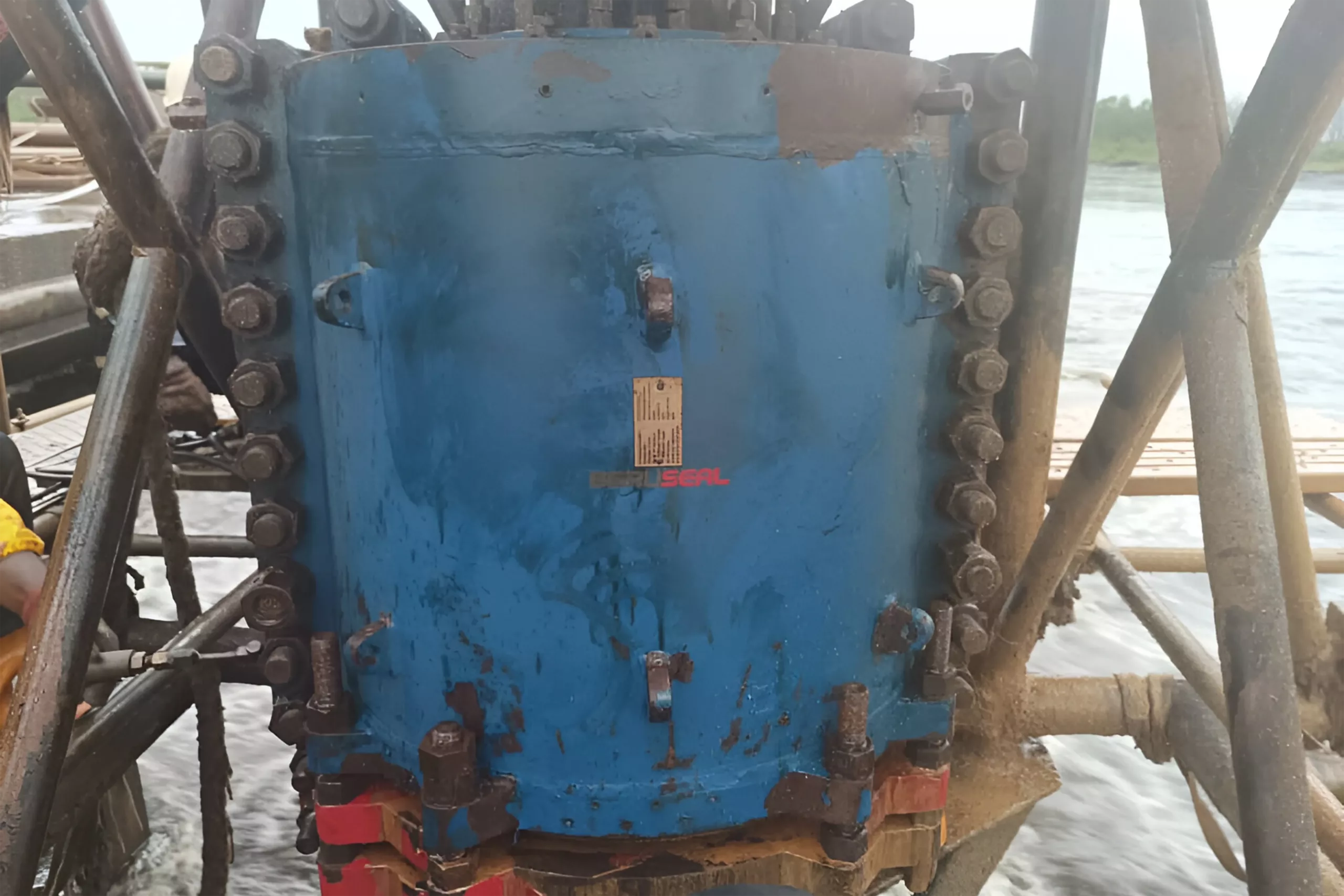
12” Straightline TLSD for an offshore Rig

2” Elbow TLSD before sealing compound has been injected
Understanding the Economics & Indirect Impact of Downtime and Failures
Downtime cost in the oil and gas sector is a complicated issue, extending far beyond the immediate expenses of labour and materials needed for repairs. When a leak occurs, operators must consider not just the cost of downtime, but also other consequences, such as lost revenue, compromised supply contracts, and potential regulatory penalties. Missed deliveries can ripple through the supply chain, affecting partners, customers, and even market prices. Frequently, the aggregate of these indirect costs surpasses the straightforward, visible expense of deploying a TLSD.
The matter is further complicated when considering health, safety and environmental risks. Unexpected failures that extend for longer than estimated may increase the chance of hazardous product damaging and presenting dangers to personnel, local communities, and surrounding ecosystems. Environmental incidents often result in fines and long-term reputational damage. To maintain compliance with comprehensive health, safety and environmental legislation as well as standards issued by organizations including ISO (International Organization for Standardization), OSHA (Occupational Safety and Health Administration), and API (American Petroleum Institute), operators are increasingly obligated to address leaks with high efficiency, where the use of TLSDs are preferable.
These aspects indicate why companies often favour the immediate use of a TLSD as opposed to waiting for the next scheduled shutdown. By acting fast and restoring normal conditions, operators avoid the accumulation of these “hidden costs” and reduce the risk of secondary incidents. A TLSD’s job, aside from leak sealing, is to minimize downtime and not only preserve profitability but also to support compliance and environmental image.
The Cost of Temporary Leak Sealing Device
What really drives the price? The cost of a TLSD is in it’s advantage of online application, short lead times and eliminating or reducing downtime. TLSD’s are engineered solutions that align with codes such as ASME PCC-2 and ASME Section VIII Division 1 and Division 2, justifying their cost through the assurance of safety and reliability for continued operation.
The costs of a TLSD vary depending on several factors, including:
- Line Size
- Design parameters (Pressure and Temperature)
- Material choice required due to service and existing equipment
- Complexity arising from equipment geometries or installation locations
- Regulation and Code Compliance
- Geographical location
A TLSD solution is priced for the complete package, which covers both engineering, manufacturing and installation.
Running the Numbers: Simple Payback Equation
To quantify the economics, we can use a simple payback period formula. This formula is a modification of a formula typically used in capital budgeting. The usual payback period formula compares the cost of investment over the average annual cash flow.
A TLSD payback period formula replaces “cost of investment” with and “the average annual cash flow” as Production Value Lost.
The TLSD payback formula quantifies what everyone intuitively understands: uptime is priceless, and any instrument that preserves it, pays for itself. This formula only compares the downtime cost vs the cost of a TLSD solution. A different approach could be taken to discuss the other sudden costs that are also avoided using a TLSD solution such as labour and new equipment but in this case, we strictly compare downtime against the cost of a TLSD solution. This payback equation answers a straightforward question: How quickly will the investment of a TLSD pay for itself by avoiding downtime?
TLSD Cost – Total installed cost of the sealing clamp (materials; labour; etc.).
Production value lost – The value of lost production or other costs that would have been incurred if the unit was shut down for a direct repair over that time.
Example Scenario 1
Facing a critical pipeline leak in a midstream section, an oil and gas operations manager confronted a high stakes decision: endure a costly, unplanned shutdown with significant production losses and contract penalties, or find an innovative alternative. Recognizing the severe implications of a full halt in throughput, the manager swiftly opted for a Temporary Leak Sealing Device (TLSD). This online solution was quickly engineered and installed, preventing a shutdown and allowing safe, continuous operations to meet delivery schedules.
Suppose:
Scenario Conclusion:
The operations manager’s decision to deploy a TLSD was clearly justified. As calculated by the Payback Period equation, the swift 8.64 minute return on investment decisively outweighed the costs of a shutdown, maintaining throughput and operational safety.
Reference:
ABB (2023). Global Survey: Unplanned Downtime Costs $125,000 per Hour on Average
Example Scenario 2
A small but persistent leak was discovered on a condensate line running near a sensitive wetland boundary at a coastal oil and gas facility. While the volume was minimal at the time, delaying repair until the next planned shutdown posed significant environmental risks, including potential soil and groundwater contamination to a highly sensitive ecosystem. The operation team was hesitant on what to do next as they were denied any hot work permit due to hazards in the area and inadequate isolation.
Suppose:
Recognizing that a direct payback of 6,7 hours, while still beneficial, was second to the environmental threat, the operations team realized the critical need for immediate containment. A TLSD offered the only viable online solution to arrest the leak, preventing further environmental damage and relieving any other potential liabilities that far exceeded any lost production value.
As the facility aligned with ISO 14001:2015, they risked non-compliance in aspects of Lack of corrective action (Clause 10.2) and Failure to prevent pollution (Clause 5.2, Environmental Policy). This further convinced the operations team to deploy a TLSD as the preferred solution.
Scenario Conclusion:
In this scenario, the operations team’s decision to deploy a TLSD was their strategic edge. Facing a critical leak near a sensitive wetland, compounded by the incapacity to perform hot work due to safety hazards, the TLSD offered the only viable solution for immediate containment. Beyond its direct financial return, indicated by a 6.7-hour payback period, the TLSD decisively mitigated severe environmental liabilities, ensured compliance with critical standards like ISO 14001, and safeguarded the facility’s reputation. This scenario also displays the versatility of a TLSD as being a reliable device for comprehensive risk management and online leak sealing solution while maintaining Regulatory compliance with international standards.
Beyond the Numbers: Why a TLSD Still Wins
While the “Payback Period” equation quantifies financial benefits from avoided downtime, a TLSD’s true value is seen beyond the numbers. Even when the calculated payback period seems short or the immediate financial return appears modest, choosing a TLSD is still the wisest option. It addresses critical risks and potential consequences that simple numbers cannot fully capture.
A hazardous leak threatens lives and reputation long before impacting profit. A TLSD effectively mitigates this risk, ensuring uncompromised safety. Certain services can cause major environmental damage, leading to potential fines and public backlash that could be easily avoided by choosing a TLSD solution. This proactive measure ensures critical regulatory compliance with standards like ISO, OSHA, and API.
Further, a TLSD maintains operations and boosts employee confidence by swiftly containing these unplanned incidents. It prevents minor issues from escalating into major crises and avoids numerous “hidden costs” associated with extended leaks or full shutdowns. In short, the device should not be viewed as an unnecessary expense but rather an invaluable insurance policy that guarantees safety, compliance, and cost saving for the facility.
