

Chandre Venter is one of the mechanical engineers at Beruseal with a strong background in both on-line leak sealing and composite repair technologies.
Chandre is a highly valued member of our engineering team. He offers a unique, holistic perspective on industrial pipe integrity, and leverages his technical experience to design and optimize high-performance, critical sealing solutions.
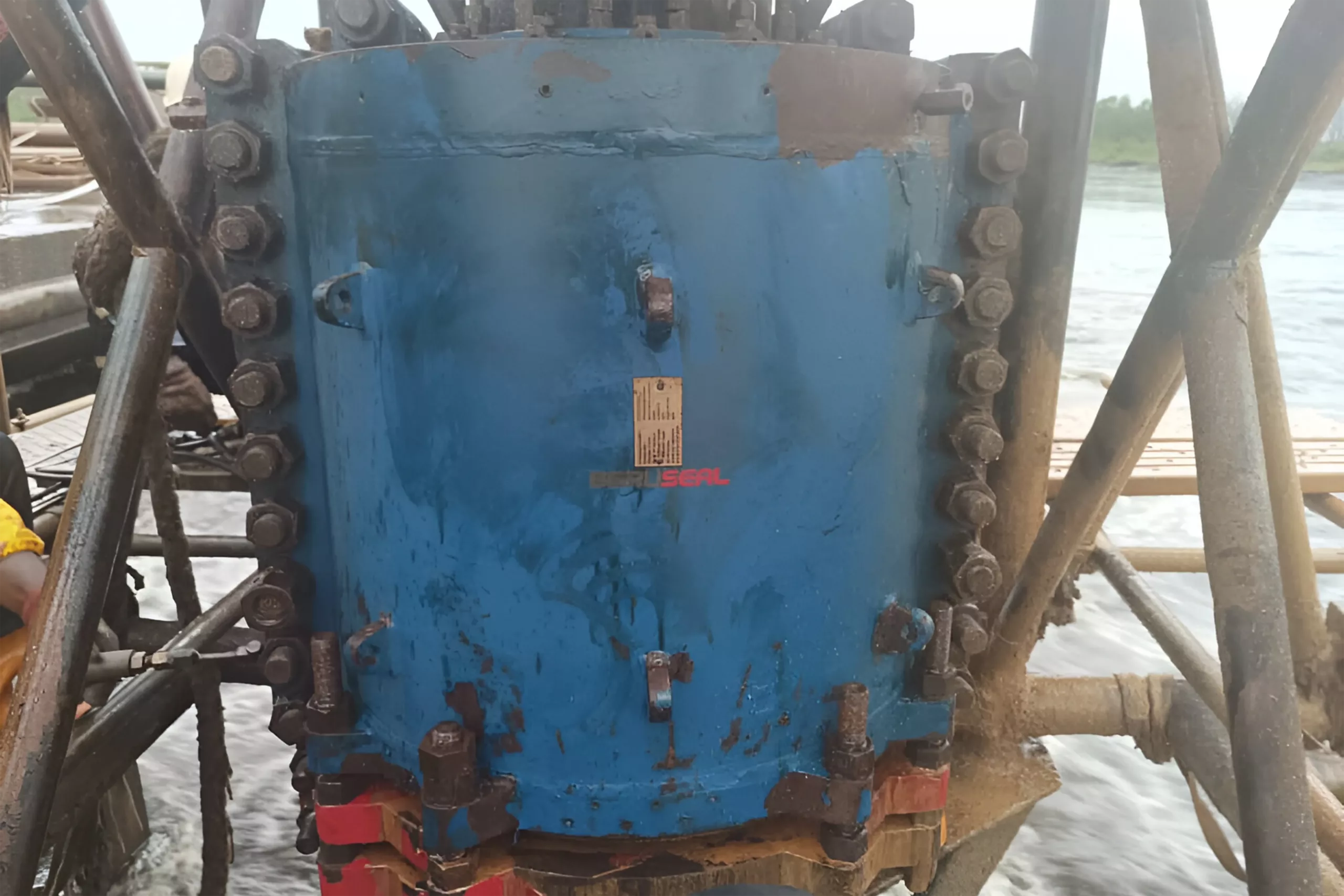
On-Line Leak Sealing
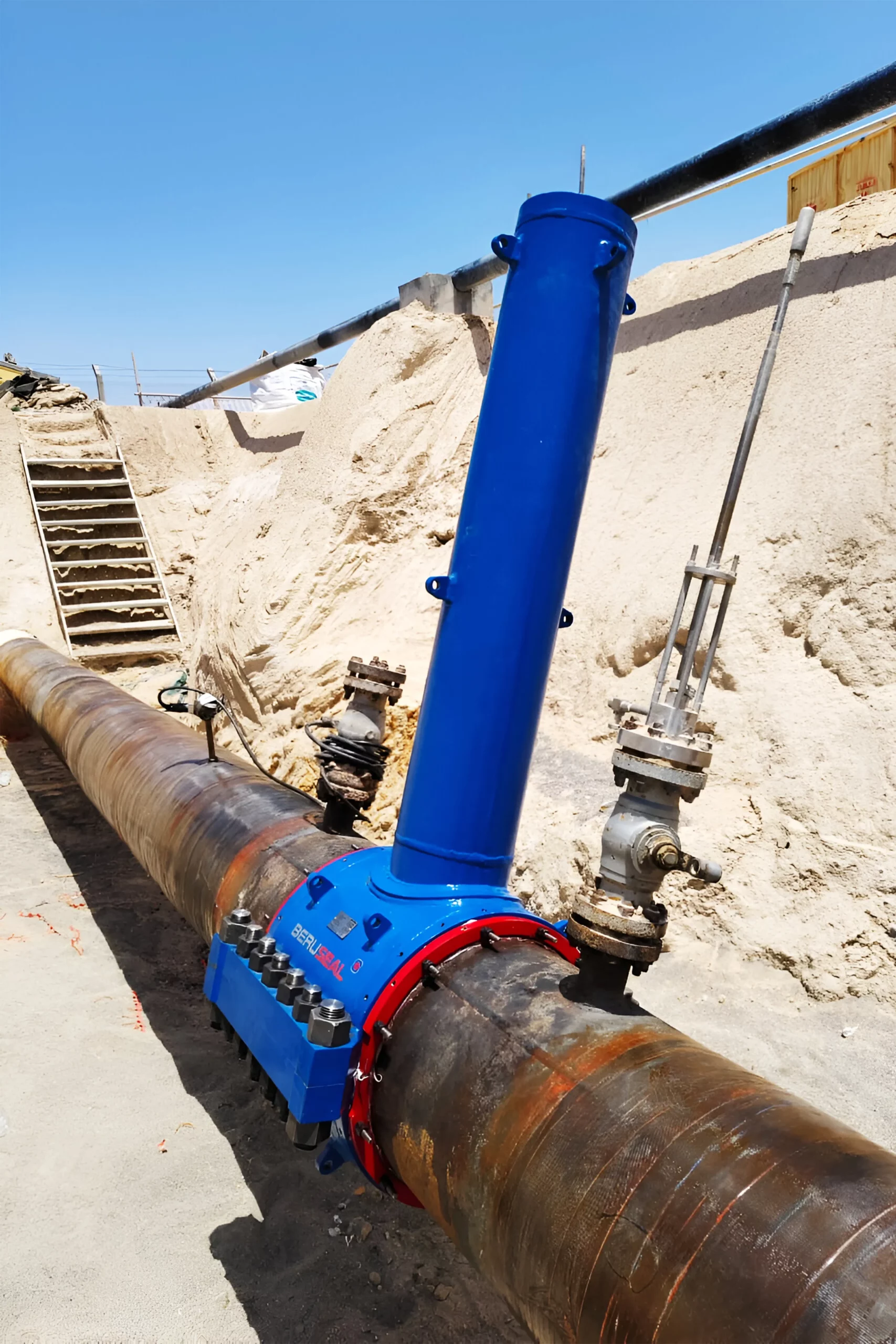
Composite Repair
What Is Online Leak Sealing
Online leak sealing is the process of arresting an active leak on pressurised piping, equipment, or flanges while the system remains in service. It eliminates the need for costly and operationally disruptive shutdowns. The approach involves designing and fabricating a temporary leak sealing device (TLSD) – typically a custom engineered clamp or enclosure – which is installed directly over the leak source and injected with a specialised sealant compound.
The TLSD forms a pressure tight enclosure around the leak point. Sealant is injected into the annular cavity created between the clamp and the pipe or fitting, effectively re-establishing a pressure boundary without interrupting the process
Understanding “Near Zero Float” In Leak Sealing
In project management, float refers to the amount of time an activity can be delayed without affecting the overall project duration. In leak sealing, this buffer is effectively eliminated by several compounding factors:
- The leak represents an active, ongoing risk to safety, production, and environment
- The system cannot be shut down – repairs must occur under live operating conditions
- Each hour of delay has measurable cost implications, including production losses and regulatory exposure
- Engineering, procurement, manufacturing, and logistics must be executed in compressed, overlapping timeframes
The result is a project environment where nearly every activity sits on the critical path. There is little to no room for error, rework, or wait time.
Critical Path Management in Leak Sealing Projects
The Critical Path Method (CPM) identifies the sequence of dependent activities that define the minimum possible project duration. In leak sealing, this sequence is compressed, time-sensitive, and highly vulnerable to disruption.
A typical critical path for a full enclosure clamp project unfolds as follows:
In this environment, every activity above is critical. Unlike conventional projects with buffer activities, a delay at any node – whether caused by incomplete data, a procurement hold, or a logistics issue – directly delays the final seal. The challenge is not just executing each step but executing them in parallel wherever possible without introducing unacceptable risks.
Critical Path Diagram
A simplified critical path for a leak sealing project can be represented as follows:
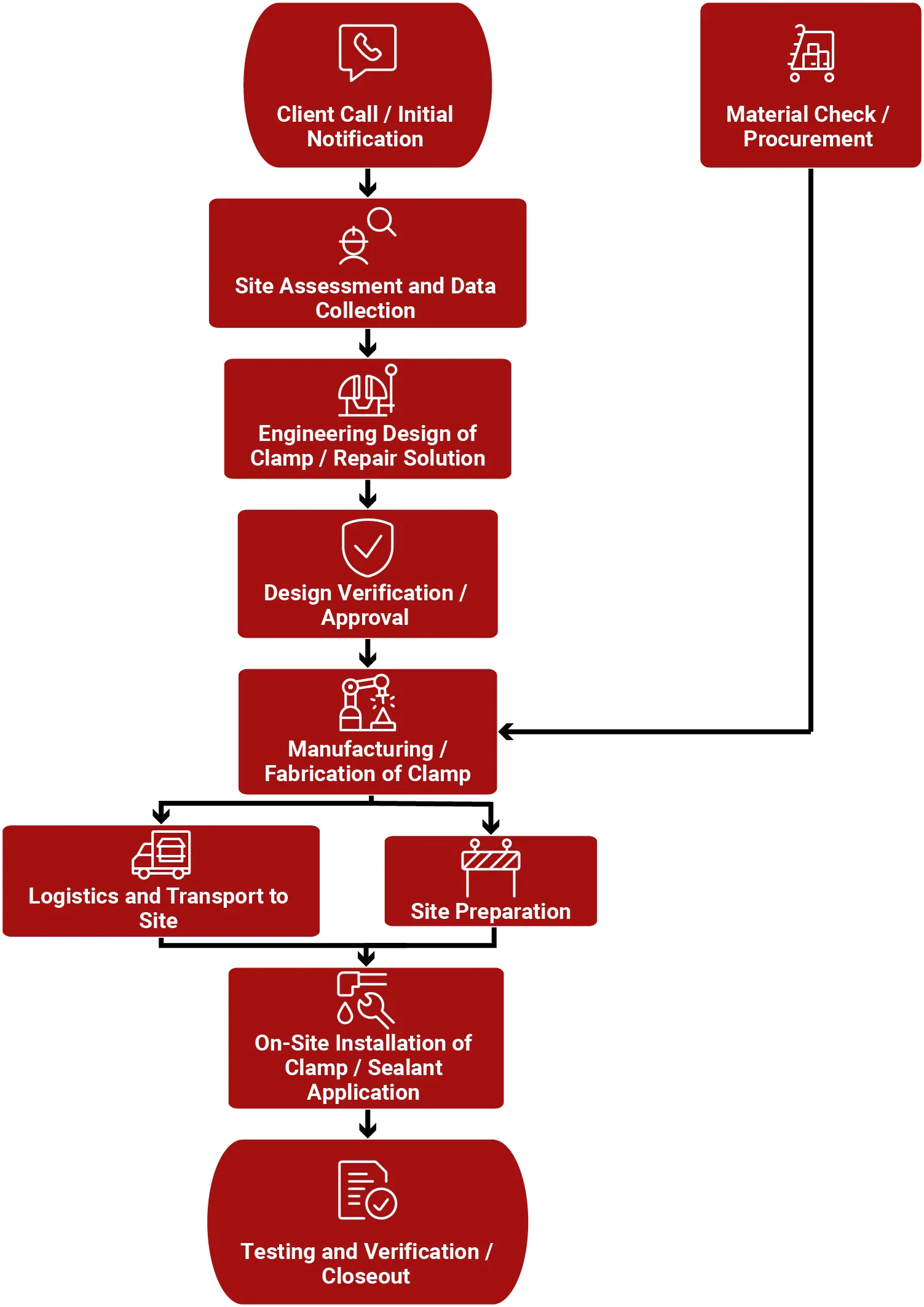
The diagram depicts two key concepts:
- The main critical path (vertical sequence)
- The parallel activities that reduce total duration
Parallel Workflows: Compressing the Timeline
Given the constraints of the critical path, leak sealing projects depend heavily on parallel execution rather than sequential workflows. The engineering team cannot afford to wait for one activity to fully conclude before initiating the next. Instead, activities are overlapped strategically, accepting managed risk in exchange for time savings.
Key Parallel Execution Strategies:
- Engineering design commences with preliminary site data – final dimensions are confirmed and incorporated as they become available, rather than waiting for a complete dataset before starting.
- Material and sealant procurement is initiated based on a design estimate before drawings are finalised – this requires experienced judgment to select appropriate materials with confidence.
- Fabrication begins on long-lead or standard components before the final optimisation of the design is complete.
- Logistics and transport planning is coordinated in parallel with fabrication – vehicles, permits, and rigging equipment are confirmed while the clamp is still being manufactured.
This approach significantly reduces overall response time, but it does introduce risk. If the design changes materially once full site data is confirmed, rework may be required. The key to managing this is engineering experience -the ability to make confident, conservative assumptions early, and then refine rather than rebuild.
Risk Management in Near Zero Float Environments
Operating under near-zero float amplifies the consequences of every risk. A risk that would represent a minor inconvenience on a conventional project can become a project-critical failure in leak sealing.
Common Risk Factors:
- Incomplete or inaccurate site data – particularly at heights, large diameter or heavily damaged components, where dimensional variation and corrosion can significantly affect clamp design.
- Design assumptions made under time pressure – where engineering judgement must substitute for full analysis.
- Manufacturing deviations driven by accelerated timelines – dimensional tolerances and surface finish requirements must be maintained even at speed’.
- Installation constraints under live conditions – at height, with steam present, requiring simultaneous management of safety and execution quality.
- Logistics delays – particularly for large, heavy clamp assemblies that require specialised transport.
Risk mitigation strategies:
- Use of proven, standardised design methodologies that have been validated on previous projects.
- Conservative engineering assumptions -designing for worst-case dimensions and pressures where site data is incomplete.
- Experienced cross-functional teams who have executed similar projects and can make sound decisions quickly.
- Pre-qualified suppliers and fabricators with the capability to mobilise rapidly.
- Continuous communication loops between design, fabrication, and site teams throughout execution.
Real Project Example
A common misunderstanding in the field is the assumption that if a leak has been sealed, the equipment has been effectively repaired. In reality, leak tightness and structural integrity are not the same thing. A device may stop a leak without restoring the pressure-containing component’s ability to resist axial loads, bending forces, thermal expansion, vibration, or pressure-induced stresses.
This distinction is especially important where the original defect has significantly reduced wall thickness or compromised load-carrying capacity. For a design life statement to be meaningful, it must address both containment performance and structural adequacy over the intended service period

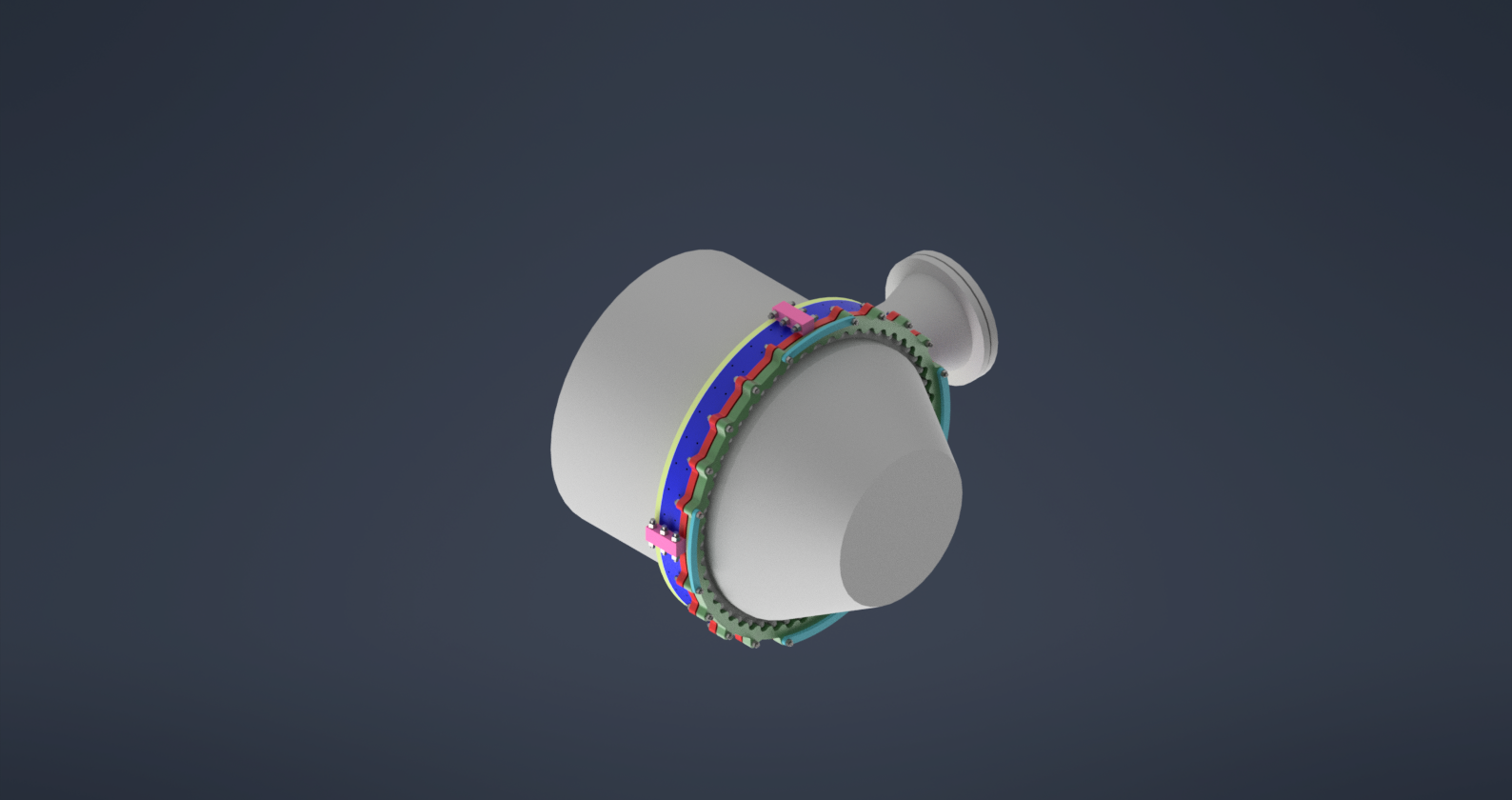
The Challenge:
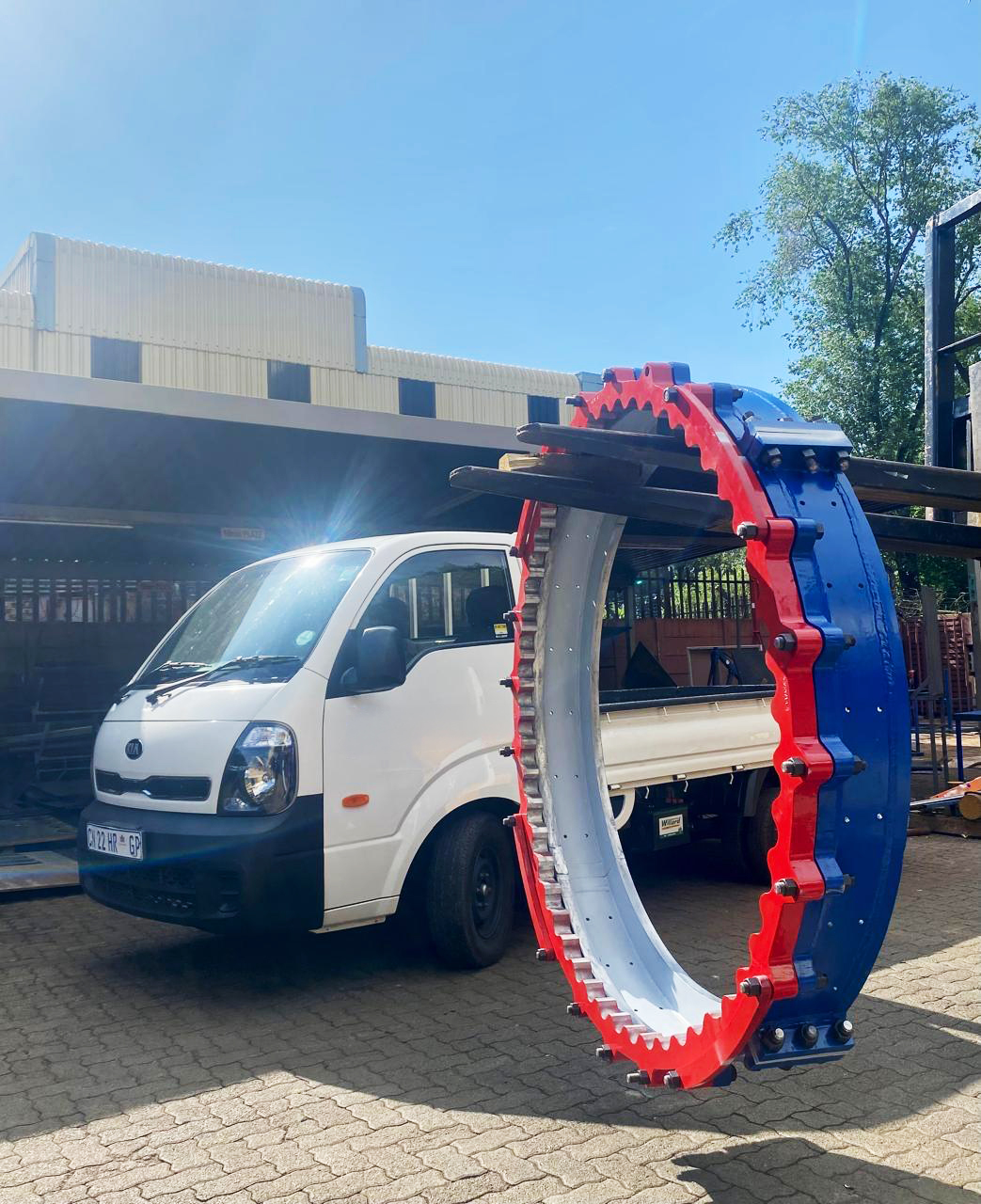
The leak was identified on the weld of a 50-inch steam and condensate flange – a large diameter component presenting significant engineering complexity. A flange of this size is not a standard catalogued item; the full enclosure clamp had to be custom designed, engineered, and fabricated from scratch. The system remained live throughout, carrying steam and condensate at operating pressure and temperature, which introduced both safety and engineering constraints from the outset.
The installation location compounded the challenge. The flange was situated at height, requiring working platforms, elevated access equipment, and a rigging plan for lifting and positioning a heavy clamp assembly -all while managing the live steam environment.
Managing four simultaneous constraints:
What made this project particularly demanding was that all four primary time constraints materialised simultaneously, rather than sequentially:
- Incomplete site data at the point of design initiation – measurements of a 50-inch flange in a live, elevated environment are difficult to obtain with full accuracy. The engineering team began design on preliminary data, building in dimensional allowances and confirming critical measurements as access improved.
- Material and hardware procurement – at this diameter, standard clamp hardware and sealing materials are not off-the-shelf items. Procurement was initiated in parallel with design, using estimated specifications, and orders were refined as the design was finalised.
- Fabrication as the dominant critical path activity -manufacturing a full enclosure clamp for a 50-inch flange is a substantial fabrication task. Machining tolerances, seal groove geometry, and injection port placement all required precision. The fabrication team worked against a fixed deadline, with logistics being coordinated in parallel.
- Logistics and site mobilisation – transport of a large clamp assembly to an elevated installation point required advance planning. Lifting equipment, rigging, and working-at-height procedures were all coordinated while fabrication was still ongoing.
The parallel management of these four workstreams compressed what might ordinarily be a sequential, multiweek process into a 2 to 5 day execution window.
Installation and Outcome:
Installation was conducted using appropriate elevated access equipment, with a rigging plan developed specifically for the clamp geometry and site conditions. The clamp halves were lifted into position, aligned over the flange, and bolted down according to the approved torquing sequence. Sealant was injected through the dedicated injection ports, with injection pressure monitored throughout to confirm cavity fill and seal integrity.
The seal was achieved on the first injection attempt. No post installation adjustments or reinjection were required. The system remained at operating pressure and temperature throughout, confirming the integrity of the repair. Production continuity was maintained without interruption.
Communication and Coordination
In time critical projects, communication is frequently the most important success factor. Technical limitations rarely cause project failure -misalignment between teams does. On a project where engineering, procurement, fabrication, logistics, and site installation are all running in parallel, the cost of a miscommunication is immediate and measurable.
On the 50-inch flange project, the following communication disciplines were maintained throughout:
- Design intent and critical dimensions were communicated directly to the fabrication team, with live updates as site measurements were confirmed -preventing fabrication from proceeding on incorrect assumptions
- Fabrication progress was shared with the logistics team in real time, enabling transport and rigging to be mobilised at the right moment without unnecessary standby time
- The site team was briefed on installation constraints -clamp weight, bolt sequence, injection port access, and elevated working requirements -well before the clamp arrived on site
- All stakeholders, including the client, received regular progress updates aligned to the critical path, ensuring that any emerging delays could be flagged and addressed collectively.
The absence of a structured communication rhythm in these environments does not just slow things down – it can render parallel workflows useless, because each stream loses alignment with the others.
Lessons Learned and Continuous Improvement
Every time-critical project generates insights that, if captured and acted upon, improve the next response. Key lessons from this project and others like it include:Improving site data collection methods.
- Invest in site data quality upfront -on large-diameter components, the time spent obtaining accurate measurements before design commences pays dividends. Even a 30-minute delay for a more thorough measurement reduces rework risk significantly.
- Pre-qualify suppliers for large-bore components -having fabricators and material suppliers who understand the urgency of leak sealing work, and who can mobilise rapidly, is a competitive differentiator that must be built before the emergency arises.
- Develop standardised design templates for common configurations – while a 50-inch flange requires a fully custom solution, standardised approaches for common sizes and joint types reduce engineering time and improve first-time quality.
- Document every parallel workflow decision -decisions made under time pressure are often the most instructive. Capturing what was assumed, when, and why it proved correct (or not) builds institutional knowledge that improves future response capability.
- Working-at-height planning cannot be an afterthought -on elevated installations, rigging and access planning must begin at the same time as engineering design, not after the clamp is ready to ship.
